Showing posts with label Famous places. Show all posts

Saturday, 13 December 2014

Surfer Garrett MacNamara rides 'weather bomb' wave

Surfers have flocked to Praia do Norte in Nazaré, Portugal, to try and catch massive waves generated by an Atlantic storm that hit the UK.
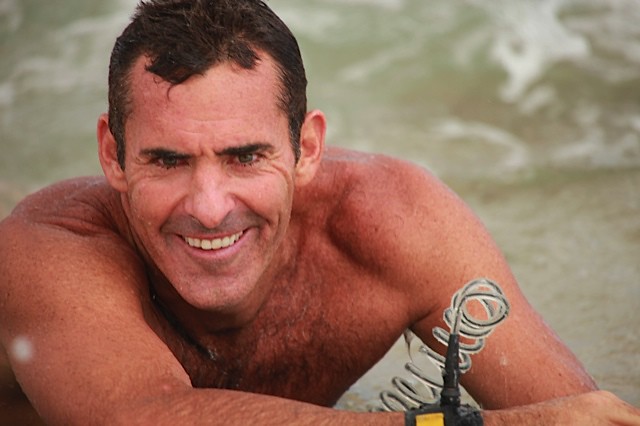
Garret Macnamara


Surfer Garrett MacNamara tried to repeat his performance of 2011 when he surfed the world's biggest wave at 30 metres high.
Unfortunately the 'weather bomb' waves off the coast of Nazaré only reached 20 metres - but he still managed to impress.
From CBBC newsround

Nazaré (Portuguese pronunciation: [nɐzɐˈɾɛ]) is a town and a municipality in subregion Oeste and Leiria District, in Portugal. It is one of the most popular seaside resorts in the Silver Coast/Costa de Prata, Portugal.The municipal holiday is September 8 with the Festas da Nazaré a religious and profane festival with processions, bullfights, fireworks, folk dancing and a fair.
The town consists of three neighbourhoods: Praia (along the beach), Sítio (an old village, on top of a cliff) and Pederneira (another old village, on a hilltop). Praia and Sítio are linked by the Nazaré Funicular, a funicular railway. (in Wikipedia)
Nazaré, Praia and Pederneira, seen from Sítio

Wednesday, 8 October 2014

Eiffel Tower gets glass floor in refurbishment project

A vertigo-inducing glass floor has been installed at the Eiffel Tower, France's most visited tourist attraction


For those scared of heights, the Eiffel Tower's new floor may be something of a challenge.
Visitors will be able to look down on Paris through a glass floor as part of a refurbishment of the tower.


Visitors to the Eiffel Tower in Paris will now be able to look down through a vertigo-inducing glass floor that forms part of a €30 million (£24m) refit of France’s most visited tourist attraction.
The transparent floor will be on the first level of the tower, at 57m, where operators hope that visitors will linger before heading to the highest viewing platform at 276 metres above the ground. Traditionally, tourists to the Eiffel Tower spend little time here before moving on to catch the better views from the two higher levels.
“We wanted people to realise how the building is anchored with its four pillars in the ground”, Alain Moatti, the architect in charge of the renovation, told le Journal du Dimanche, the French Sunday newspaper.
The refit of the half-hectare first floor, which began in May 2012 and was unveiled to the public today, also includes shops, restaurants and a museum telling the story of the 125-year-old construction. The tower’s eco-friendliness has also improved, with the installation of four solar panels that will provide about half of the tower’s hot water requirements. Some of the toilets will also be operated using rain water.
                                    A tourist captures the view (Photo: Reuters)
About seven million people visit the Eiffel Tower each year – 85 per cent of them foreigners – making it the world’s busiest paid-for tourist attraction. The tower’s management also hopes that the renovation will attract more Parisians to the “Dame en Fer” (The Iron Lady), as it is sometimes referred to in French.
The tower opened in 1889 and was named after Gustave Eiffel, whose company engineered the project. At 324m in height, it was the world’s tallest building for 41 years until the Chrysler building was built in New York in 1930.
From CBBC newsround and The Telegraph

Tuesday, 19 August 2014

'Big Ben' clock tower gets cleaned

Cleaners have been busy scrubbing the clock on the Elizabeth Tower at Westminster Palace.


Many people know the landmark as Big Ben - which is the nickname of the bell inside the clock tower.
The tower was named Elizabeth Tower in 2012 to celebrate the Queen's Diamond Jubilee.
The clock hands were frozen at 12:00 so the four cleaners could abseil in front of the clock face. (From CBBC newsround)

The tower holds the largest four-faced chiming clock in the world and is the third-tallest free-standing clock tower. The tower was completed in 1858 and had its 150th anniversary on 31 May 2009, during which celebratory events took place.The tower has become one of the most prominent symbols of the United Kingdom and is often in the establishing shot of films set in London.
The Elizabeth Tower (previously called the Clock Tower), named in tribute to Queen Elizabeth II in her Diamond Jubilee year,more popularly known as Big Ben,was raised as a part of Charles Barry's design for a new palace, after the old Palace of Westminster was largely destroyed by fire on the night of 16 October 1834. 


The new Parliament was built in a Neo-gothic style. Although Barry was the chief architect of the Palace, he turned to Augustus Pugin for the design of the clock tower, which resembles earlier Pugin designs, including one for Scarisbrick Hall. The design for the tower was Pugin's last design before his final descent into madness and death, and Pugin himself wrote, at the time of Barry's last visit to him to collect the drawings: "I never worked so hard in my life for Mr Barry for tomorrow I render all the designs for finishing his bell tower & it is beautiful."[ The tower is designed in Pugin's celebrated Gothic Revival style, and is 315 feet (96.0 m) high (roughly 16 storeys).
The bottom 200 feet (61.0 m) of the tower's structure consists of brickwork with sand coloured Anston limestone cladding. The remainder of the tower's height is a framed spire of cast iron. The tower is founded on a 50 feet (15.2 m) square raft, made of 10 feet (3.0 m) thick concrete, at a depth of 13 feet (4.0 m) below ground level. The four clock dials are 180 feet (54.9 m) above ground. The interior volume of the tower is 164,200 cubic feet (4,650 cubic metres).
Despite being one of the world's most famous tourist attractions, the interior of the tower is not open to overseas visitors, though United Kingdom residents are able to arrange tours (well in advance) through their Member of Parliament.However, the tower has no lift, so those escorted must climb the 334 limestone stairs to the top.
Due to changes in ground conditions since construction, the tower leans slightly to the north-west, by roughly 230 millimetres (9.1 in) over 55 m height, giving an inclination of approximately 1/240. This includes a planned maximum of 22 mm increased tilt due to tunnelling for the Jubilee line extension. Due to thermal effects it oscillates annually by a few millimetres east and west.(in Wikipedia)

Saturday, 5 April 2014

Animal lovers go crazy for London's cat café

London's first cat café has given cat lovers the purrrfect opportunity to enjoy a hot drink with some furry friends.

Cat cafe

The café opened its doors in March and is already a huge success, with 3,000 bookings made within its first hour.
In fact, Lady Dinah's Cat Emporium is so popular it's booked up until June.
Popular in Japan, cat cafés are a haven for lovers of all things feline, where customers can stroke, pet and coo over the animals.
cat
One of the friendly faces at the cat café
"The idea is you can come have a peaceful lunch or high tea and be surrounded by cats. If you're lucky one of them will fall asleep on your lap," said Anna Kogan, co-owner of Dinah's.
The café has 11 cats, donated by people leaving the country or unable to care for them.
Anna says she plans to adopt more cats if they get the go-ahead from the local council.

From CBBC Newsround

Cat cafe opens in London, the purr-fect cup of coffee


Sunday, 2 March 2014

Spain's famous Altamira caves open again for a day

Spain's famous Altamira caves have briefly opened to the public, for the first time in 12 years.


People chosen in a draw were amazed at the Ice Age paintings of bison, bulls and other animals.


The paintings are special because they are thought to be the oldest art in Europe.
And one piece of art - a faint red dot - is said to be more than 40,000 years old.

From CBBC Newsround
Altamira is a cave in Spain famous for its Upper Paleolithic cave paintings featuring drawings and polychrome rock paintings of wild mammals and human hands.

Its special relevance comes from the fact that it was the first cave in which prehistoric cave paintings had been discovered. When the discovery was first made public in 1880, it led to a bitter public controversy between experts which continued into the early 20th century, as many of them did not believe prehistoric man had the intellectual capacity to produce any kind of artistic expression. The acknowledgement of the authenticity of the paintings, which finally came in 1902, changed forever the perception of prehistoric human beings.
It is located near the town of Santillana del Mar in CantabriaSpain, 30 km west of the city of Santander. The cave with its paintings has been declared a World Heritage Site by UNESCO.
    
The cave is approximately 300 meters long and consists of a series of twisting passages and chambers. The main passage varies from two to six meters in height. The cave was formed through collapses following early karstic phenomena in the calcerous rock of Mount Vispieres.
Archaeological excavations in the cave floor found rich deposits of artifacts from the Upper Solutrean (c. 18,500 years ago) and Lower Magdalenean (between c. 16,500 and 14,000 years ago). Both periods belong to the Paleolithic or Old Stone Age. In the millennia between these two occupations, the cave was evidently inhabited only by wild animals. Human occupants of the site were well-positioned to take advantage of the rich wildlife that grazed in the valleys of the surrounding mountains as well as the marine life available in nearby coastal areas. Around 13,000 years ago a rockfall sealed the cave's entrance, preserving its contents until its eventual discovery, which occurred after a nearby tree fell and disturbed the fallen rocks.
Human occupation was limited to the cave mouth, although paintings were created throughout the length of the cave. The artists used charcoal andochre or haematite to create the images, often diluting these pigments to produce variations in intensity and creating an impression of chiaroscuro. They also exploited the natural contours in the cave walls to give their subjects a three-dimensional effect. The Polychrome Ceiling is the most impressive feature of the cave, depicting a herd of extinct steppe bison (Bison priscus) in different poses, two horses, a large doe, and possibly a wild boar.
Dated to the Magdelenean occupation, these paintings include abstract shapes in addition to animal subjects. Solutrean paintings include images of horses and goats, as well as handprints that were created when artists placed their hands on the cave wall and blew pigment over them to leave a negative image. Numerous other caves in northern Spain contain Paleolithic art, but none is as complex or well-populated as Altamira.

Text from Wikipedia