Showing posts with label Culture. Show all posts

Thursday, 7 April 2016

Harry Potter chair sold at auction in the US

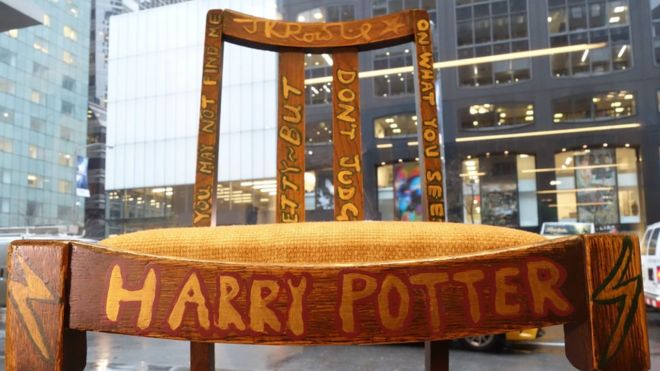
The chair that Harry Potter author JK Rowling sat on while writing the first two books has sold in the US for around £280,000.

A chair used, and later decorated, by author JK Rowling while she wrote the first two Harry Potter books
JK Rowling wrote the first two Harry Potter books in this chair.
She had picked up the chair for free in Edinburgh before the books were published, and then had hand-painted them.
The chair has messages written from JK Rowling, including: "O, you may not find me pretty but don't judge on what you see" and "I wrote Harry Potter while sitting on this chair".
The chair also comes with a letter written by the author, saying that the chair hurt her back.
It reads: "I was given four mismatched dining room chairs in 1995 and this was the comfiest one, which is why it ended up stationed permanently in front of my typewriter, supporting me while I typed out Harry Potter and the Philosopher's Stone and Harry Potter and the Chamber of Secrets. My nostalgic side is quite sad to see it go, but my back isn't."
From CBBC Newsround/ Entertainment

Saturday, 5 March 2016

New Zealanders voting on whether to change flag

People in New Zealand have started voting on whether to change their national flag.

New Zealand flags
The country's prime minister wants to change to a design so that it looks different to the UK flag.
The current flag includes the Union flag - the United Kingdom's national flag, from a time when the country was controlled by the UK.
Voters are being asked to choose between the current design and a new flag based around the traditional New Zealand silver fern.
People have three weeks to vote. ( CBBC Newsround)
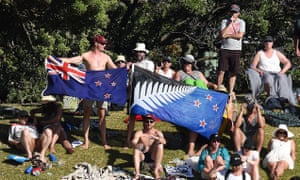
The proposed alternative New Zealand flag (right) is seen alongside the current flag during the cricket Tes between Australia and New Zealand in Wellington in February.
The proposed alternative New Zealand flag (right) is seen alongside the current flag during the cricket Tes between Australia and New Zealand in Wellington in February. Photograph: Dave Hunt/AAP

The final stage in New Zealand’s bid to change its flag has begun, with voters asked to choose between the current design and a silver fern against blue and black.
Silver Fern (Black, White and Blue), by Melbourne-based New Zealander Kyle Lockwood, was the highest-ranked of five designs in a referendum last year, with 50.58% of the vote.
The second referendum asks voters to choose between it and the current flag. Those correctly enrolled will receive papers in the mail between Thursday 3 March and Friday 11 March.
Voting in the referendum closes on Thursday 24 March with the preliminary result expected around 8.30pm local time. All votes postmarked by Wednesday 23 March will be eligible for the count. .


The final result will be declared on 30 March, after all votes received in time have been processed. If the vote is for change, there could be a transition period of around 12 months.


The referendum opens amid apparent flagging support for change, with the One News Colmar Brunton poll in late February finding that two-thirds of New Zealanders are in favour of keeping the current design.
“You can say a lot of bad things about the alternative flag, but probably the worst is that it makes the current flag look good,” wrote commentator Finlay Macdonald.
From The Guardian

Thursday, 4 February 2016

Chinese Lunar New Year: Spectacular light show in China

A spectacular light show is taking place in China.

It's to welcome the Chinese Lunar New Year. Twenty thousand lights were used here to represent joy and prosperity. (CBBC)


The new year, also known as the Spring Festival, is marked by the lunisolar Chinese calendar, so the date changes from year to year.
The festivities usually start the day before the New Year and continue until the Lantern Festival, the 15th day of the new year.
The Chinese symbol for monkeyThe Chinese symbol for monkey
Each Chinese New Year is characterised by one of 12 animals which appear in the Chinese zodiac. The Chinese zodiac is divided into 12 blocks (or houses) just like its western counterpart, but with the major difference being that each house has a time-length of one year instead of one month.
This year it's the Year of the Monkey, the ninth animal in the cycle. The next Year of the Monkey will be in 2028.

People born in the Year of the Monkey are characterised as quick-witted, curious, innovative and mischievous, but it is also believed to be one of the most unlucky years in the Chinese calendar.
The general image of people in this zodiac sign is of always being smart, clever and intelligent, especially in their career and wealth.
They are lively, flexible, quick-witted and versatile. In addition, their gentleness and honesty bring them an everlasting love life. Although they were born with enviable skills, they still have several shortcomings, such as an impetuous temper and a tendency to look down upon others.
  • Strengths: sociable, innovative, enthusiastic, self-assured
  • Weaknesses: suspicious, cunning, selfish, arrogant, jealous
  • Lucky numbers: 1, 7, 8
  • Lucky colours: white, gold, blue
  • Lucky flowers: chrysanthemum, alliums
  • Lucky directions: north, northwest, west
Julius Caesar, Leonardo da Vinci, Charles Dickens, Lord Byron, Celine Dion, Tom Hanks, Will Smith, Halle Berry, Christina Aguilera, Diana Ross, Elizabeth Taylor, Alice Walker, Michael Douglas, Owen Wilson, Daniel Craig, Mick Jagger, Bette Davis, Annie Oakley, Eleanor Roosevelt, Cuba Gooding Jr., Gisele Bundchen, Kim Cattrall, Nick Carter, Patricia Arquette, Alyson Stoner, Christina Ricci, Demi Lovato, Miley Cyrus, Nick Jonas, Selena Gomez.

Which Chinese Zodiac sign are you?

Your sign is derived from the year you were born in the Chinese lunar calendar.
The years below are a rough guide, but if you were born in January or February it may be slightly different as the new year moves between 21 January and February 20.
  • Rat: 2008, 1996, 1984, 1972, 1960
  • Ox: 2009, 1997, 1985, 1973, 1961
  • Tiger: 2010, 1998, 1986, 1974, 1962
  • Rabbit: 2011, 1999, 1987, 1975, 1963
  • Dragon: 2012, 2000, 1988, 1976, 1964
  • Snake: 2013, 2001, 1989, 1977, 1965
  • Horse: 2014, 2002, 1990, 1978, 1966
  • Sheep: 2015, 2003, 1991, 1979, 1967
  • Monkey: 2016, 2004, 1992, 1980, 1968
  • Rooster: 2017, 2005, 1993, 1981, 1969
  • Dog: 2018, 2006, 1994, 1982, 1970
  • Pig: 2019, 2007, 1995, 1983, 1971
The Chinese Zodiac
In The Telegraph

Tuesday, 3 November 2015

What is Bonfire Night? The history of November 5

Why do they have Bonfire Night and fireworks displays every November 5 in the UK? 


Fireworks display

What is Bonfire Night?

On November 5 people across the UK celebrate Bonfire Night.
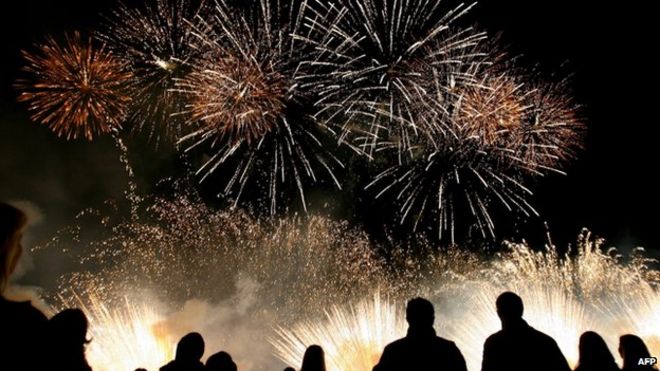
There are small fireworks parties in back gardens along with big organised displays in public parks.
The reason they do it is because it's the anniversary of an attempt to blow up the Houses of Parliament led by a man called Guy Fawkes.
It's called the Gunpowder Plot, and bonfires are lit to burn the "Guy" - a kind of dummy that represents Fawkes.

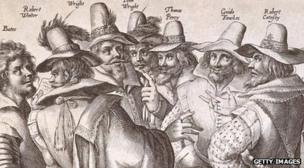
Image captionGuy Fawkes and conspirators of the Gunpowder PlotGuy Fawkes (second from right) and the conspirators of the Gunpowder Plot

What was the Gunpowder Plot?

Guy (Guido) Fawkes led the Gunpowder plot in 1605. It was a plan to blow up King James I and his government. 
Fawkes and his group put 36 barrels of gunpowder in cellars under the Houses of Parliament in London, ready to set off a massive explosion.
One member of the group sent a letter to his friend who worked in Parliament, warning him to stay away on November 5.


Fireworks display
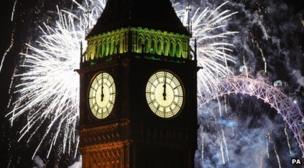
Image captionThe plot was to blow up the Houses of Parliament in London

The King's supporters got hold of the letter and the plot was rumbled!
Guards broke into the cellars where the gunpowder plotters were waiting. They were arrested, tortured and executed.
The Gunpowder Plot was about religion. England was a Protestant country, and the plotters were Catholic.
The group wanted to return England to the Catholic faith. They thought they could do this by killing King James I and his ministers.
Bonfire
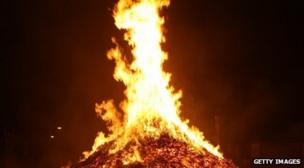
  Bonfires are lit all over the UK every November 5

From CBBC Newsround

Saturday, 19 July 2014

Japanese rice field transformed into giant artwork


A rice field in northern Japan has got tourists flocking to it after being transformed into a giant artwork.
The scene is about the legend of Mount Fuji and has been created by artists using coloured rice plants.
The display has been made to commemorate the Mount Fuji's registration as a UNESCO World Cultural Heritage site.
From CBBC Newsround


Tanbo Art is made by using various types and colors of rice to create giant pictures in the rice fields. It started back in 1993 as a way to revitalize the rice village of Inakadate, in the area of Aomori. For the first nine years, the farmers created a simple picture of Mount Iwaki but the art has now evolved into more complex designs featuring popular characters that appeal to both kids and adults.
Every April, the villagers meet and decide what to plant for the year. They first sketch out the designs on computers and then sow seeds of the varying rice plants. This year, the huge images have crossed the island’s limits and feature a host of awesome designs, including the famous “Ushiwaka and his subordinate Benkei” and Mazinger Z.

From: http://inhabitat.com/giant-rice-paddy-art-flourish-in-japan/tanbo-art-giant-illustrations-rice-fields-japan-7/

Friday, 27 June 2014

Caveman poo suggests they may have eaten vegetables

Scientists studying Neanderthal poo say that our prehistoric ancestors ate far more vegetables than had been thought.


Who were the Neanderthals?

  • Their ancestors left Africa 400,000 years ago
  • They travelled to Europe and Asia where they evolved into Neanderthals
  • They went extinct 30,000 years ago
Actors portraying Neanderthals from Andrew Marr's History of the World
Researchers examined ancient specimens of poo, from people who lived in part of southern Spain 50,000 years ago.
They found that while all the samples contained traces of meat, but two showed signs of plant matter, suggesting they ate their veg too.
The study's authors say the results will help us understand how humans have come to dominate the planet.
By doing detailed tests on the ancient poo, the team found that while meat was the main part of Neanderthals' diet, they may have also consumed a fairly regular portion of plants, such as tubers, berries, and nuts.
"We believe Neanderthals probably ate what was available in different situations, seasons, and climates," says Ainara Sistiaga, from the University of La Laguna in Spain, who worked on the study with colleagues from MIT in America.
Traces in the teeth
This latest finding comes after the recent discovery of plant microfossils trapped in Neanderthal teeth - which some thought might suggest fruit and veg in their diet.
But Ainara's more cautious about the teeth evidence: "Sometimes in prehistoric societies, they used their teeth as tools, biting plants, among other things.
Neanderthal artist's impression
"We can't assume they were actually eating the plants based on finding microfossils in their teeth."
The traces this study found in the poo, suggest the first direct evidence for a more varied diet for our cavemen ancestors.


The results of the study were published in the journal PLoS One.
From CBBC newsround


Sunday, 2 March 2014

Spain's famous Altamira caves open again for a day

Spain's famous Altamira caves have briefly opened to the public, for the first time in 12 years.


People chosen in a draw were amazed at the Ice Age paintings of bison, bulls and other animals.


The paintings are special because they are thought to be the oldest art in Europe.
And one piece of art - a faint red dot - is said to be more than 40,000 years old.

From CBBC Newsround
Altamira is a cave in Spain famous for its Upper Paleolithic cave paintings featuring drawings and polychrome rock paintings of wild mammals and human hands.

Its special relevance comes from the fact that it was the first cave in which prehistoric cave paintings had been discovered. When the discovery was first made public in 1880, it led to a bitter public controversy between experts which continued into the early 20th century, as many of them did not believe prehistoric man had the intellectual capacity to produce any kind of artistic expression. The acknowledgement of the authenticity of the paintings, which finally came in 1902, changed forever the perception of prehistoric human beings.
It is located near the town of Santillana del Mar in CantabriaSpain, 30 km west of the city of Santander. The cave with its paintings has been declared a World Heritage Site by UNESCO.
    
The cave is approximately 300 meters long and consists of a series of twisting passages and chambers. The main passage varies from two to six meters in height. The cave was formed through collapses following early karstic phenomena in the calcerous rock of Mount Vispieres.
Archaeological excavations in the cave floor found rich deposits of artifacts from the Upper Solutrean (c. 18,500 years ago) and Lower Magdalenean (between c. 16,500 and 14,000 years ago). Both periods belong to the Paleolithic or Old Stone Age. In the millennia between these two occupations, the cave was evidently inhabited only by wild animals. Human occupants of the site were well-positioned to take advantage of the rich wildlife that grazed in the valleys of the surrounding mountains as well as the marine life available in nearby coastal areas. Around 13,000 years ago a rockfall sealed the cave's entrance, preserving its contents until its eventual discovery, which occurred after a nearby tree fell and disturbed the fallen rocks.
Human occupation was limited to the cave mouth, although paintings were created throughout the length of the cave. The artists used charcoal andochre or haematite to create the images, often diluting these pigments to produce variations in intensity and creating an impression of chiaroscuro. They also exploited the natural contours in the cave walls to give their subjects a three-dimensional effect. The Polychrome Ceiling is the most impressive feature of the cave, depicting a herd of extinct steppe bison (Bison priscus) in different poses, two horses, a large doe, and possibly a wild boar.
Dated to the Magdelenean occupation, these paintings include abstract shapes in addition to animal subjects. Solutrean paintings include images of horses and goats, as well as handprints that were created when artists placed their hands on the cave wall and blew pigment over them to leave a negative image. Numerous other caves in northern Spain contain Paleolithic art, but none is as complex or well-populated as Altamira.

Text from Wikipedia

Tuesday, 29 October 2013

What is Halloween?

Halloween is the scariest night of the year. All around the world, people celebrate spookiness.

Carved pumpkins

On 31 October there are loads of Halloween traditions. If you go to a party, expect stuff like:
  • Scary fancy dress
  • Making pumpkin lanterns
  • Trick or treating
  • Bobbing for apples
  • Telling ghost stories
But not everyone likes celebrating Halloween.
Some religious people believe that making a game out of evil spirits and witches is wrong.
From CBBC newsround
Would you like to play some Halloween games? Yes?
Try these links:

Thursday, 19 September 2013

Miniature books on display in Scotland

Some of the world's smallest books have been put on display at the National Library of Scotland.

A book next to a penny. The book is only slightly larger than the penny.
Robert Burns's poetry also deserved a miniature book


One of the books is a copy of Old King Cole which measures less than 1mm in height!

A tiny book

It was published in 1985 and held the world record for the smallest printed book for 20 years.
It is one of about 80 miniature books which will go on display in Edinburgh until 17 November.
A miniature book is generally defined as one that is less than 7.5cm tall.

Why would anybody publish such tiny books?

In the 1870s, the Glasgow book publisher David Bryce & Son became one of the most successful miniature book publishers in the world.
They found that books sold thousands upon thousands more copies if they were miniature.
Others, like the tiny copy of Old King Cole, are simply published for a bit of fun.
From CBBC Newsround

Thursday, 6 June 2013

Giant climbing frame sculpture opens in London

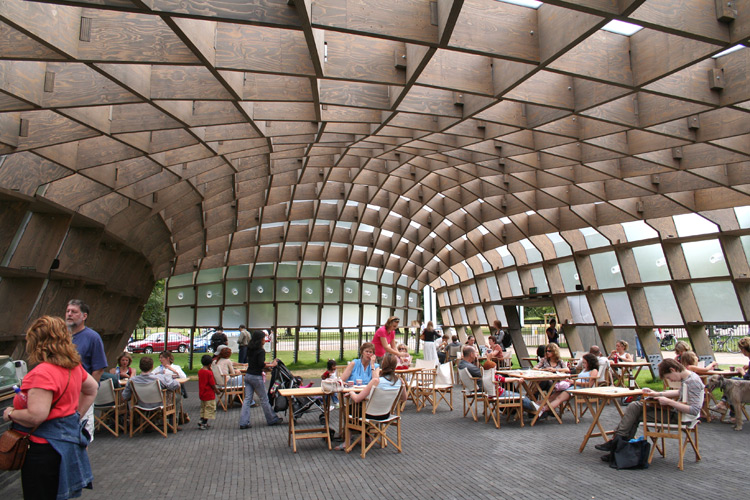
A giant climbing frame sculpture has been built in London's Kensington Gardens

It's an annual project where the Serpentine Gallery asks an architect to design a pavilion for its gardens.

The Serpentine Gallery Pavillion by the Portuguese architects
 Alvaro Siza e Eduardo Souto de Moura/ with C Balmond /2005

Japanese architect, Sou Fujimoto, is the thirteenth and youngest person to design a sculpture for the gardens.
He has created a giant, cloud-like structure, that looks a lot like a climbing frame! It opens to the public this weekend and is free to visit.
The sculpture takes up over 350 square metres of grass and is made of 20mm steel poles.
Unlike normal exhibitions, visitors are encouraged to go inside and interact with the Pavilion, which will be there for four months until October.

From CBBC News

Friday, 29 March 2013

Easter Traditions in Britain

The Traditional Egg Gift

These eggs were painted in bright colours to give them further meaning as a gift.
As chocolate became more wide spread in the 20th Century, a chocolate version of the traditional painted egg was developed. The size of the chocolate egg has grown over the years and is now more likely to be the size of an ostrich egg rather than a small birds egg.


Easter cards

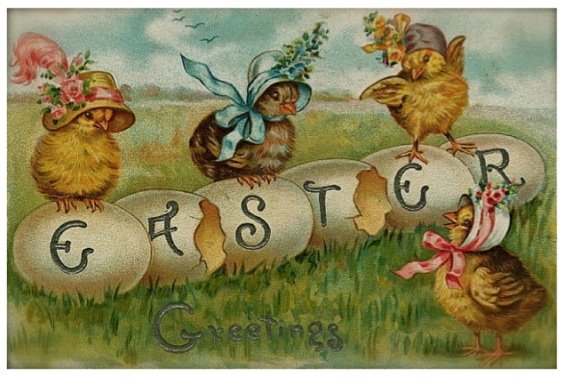
Easter cards arrived in Victorian England, when a stationer added a greeting to a drawing of a rabbit. The cards proved popular.

Easter Egg Hunt

Small chocolate eggs are hidden for the children to find on the traditional Easter Egg Hunt. In recent years this game has been linked to the Easter Bunny, which only arrived in England relatively recently.


Click on the link to know more about Easter traditions

Thursday, 14 February 2013

Happy Valentine's Day!!!


She Fills My Thoughts

She fills my thoughts before I sleep
And she’s there again when I awake
I have given my heart without regret
I gave it to her for my hearts sake
We have found an all-embracing love
If I lost her now my heart would breaK


Monday, 30 May 2011

Mapman Game


Welcome to the Mapman® Game. Scholastic's cartographer, Jim McMahon, has written four questions for you which will score instantly after you answer each one. Don't worry. If you don't know the answer, Mapman has a tip to help you figure it out. Click on Tips and Hints for the information.
And check back soon for an all-new set of questions!


Click on the link to access the game

http://teacher.scholastic.com/scholasticnews/games_quizzes/mapman/index.asp