Showing posts with label Healthy habits. Show all posts

Monday, 4 January 2016

New app helps reveal amount of sugar in food and drink

A new mobile phone app has been launched to try help people understand how much sugar is in their food and drink.
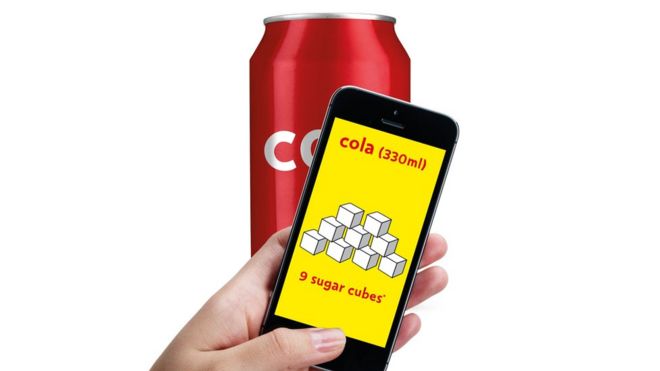
The sugar app from Public Health England
The app scans barcodes of thousands of food and drink products to reveal total sugar content

The app, from a government group called Public Health England, works by scanning barcodes to reveal the total sugar content, in cubes or grams, of more than 75,000 products.
The group hope it will help combat tooth decay and obesity by encouraging families to choose healthier options, by showing just how much sugar is in everyday food and drink.
It's thought young children are eating three times more sugar than the recommended limit at the moment.

A toddler drinking from a juice carton
A small carton of juice can contain more than five cubes of sugar

How much sugar?

  • a can of cola - nine cubes of sugar
  • a chocolate bar - six cubes of sugar
  • a small carton of juice - more than five cubes of sugar

Daily recommended sugar limits

  • Four to six year olds - five sugar cubes or 19g
  • Seven to ten year olds - six sugar cubes or 24g
  • 11 year olds and above - seven sugar cubes or 30g
Source: Public Health England
From CBBC Newsround

Wednesday, 25 March 2015

What does a healthy diet consist of?

For a healthy diet, replace unhealthy and fattening foods with healthier alternatives, such as fresh fruits and vegetables.


"It's important to keep things in moderation and balance."


Healthy Eating Tips

Starting Points

Your food and physical activity choices each day affect your health — how you feel today, tomorrow, and in the future.

These tips and ideas are a starting point. You will find a wealth of suggestions here that can help you get started toward a healthy diet. Choose a change that you can make today, and move toward a healthier you.

Wednesday, 6 March 2013

Does skipping breakfast make you put on weight?

It’s a plausible theory, until you look through the evidence. Then things become a little messy.

Does skipping breakfast make you put on weight?
We’re often told that breakfast is an essential part of a healthy diet, especially if you are watching your weight. Some schools run breakfast to ensure that as many pupils as possible eat this all-important first meal of the day. But not everyone can stomach an early morning meal. In Europe and US between 10% and 30% of people skip breakfast, with teenage girls most likely to give it a miss, saying they’ve not got time, don’t feel hungry or that they’re on a diet.
Missing breakfast for dietary reasons runs counter to a great deal of advice. The logic goes that missing an early morning meal will leave you hungry for the rest of the day, tempting you to snack on high-calorie foods, and resulting in weight gain. 
It’s a plausible theory, until you look for evidence that people who skip breakfast consume any more calories than anyone else. The impact skipping breakfast has on weight is harder to study systematically than you might expect. The first problem is how to define that first meal of the day. How much food counts as a real breakfast? Do you have to eat it seven days a week to be defined as a breakfast-eater? And how early in the day does it need to be eaten? For example, when the US Department of Agriculture conducted a systematic review on the topic they found that most studies defined breakfast as food eaten before ten in the morning. Anyone who ate at 10.05 was considered to have skipped breakfast, which could skew the results.
Another difficulty is that what is eaten for breakfast varies from country to country. In Scandinavia it might include smoked fish, in Germany cold meats, and in the UK boxed cereals, which can often contain more sugar and salt than people realise (the Consensus Action on Salt and Health group says some cereals are saltier than seawater). This makes the impact of eating breakfast more difficult to study on a global level because the nutritional benefits will depend on what you include in the meal.
From BBC News - Health