Showing posts with label rare events. Show all posts

Saturday, 6 February 2016

A teenager gets to keep gold bar she found in a lake

Back in August a 16 year old girl found a gold bar while she was swimming in a lake in Germany and now she gets to keep it.
Lucky this girl!
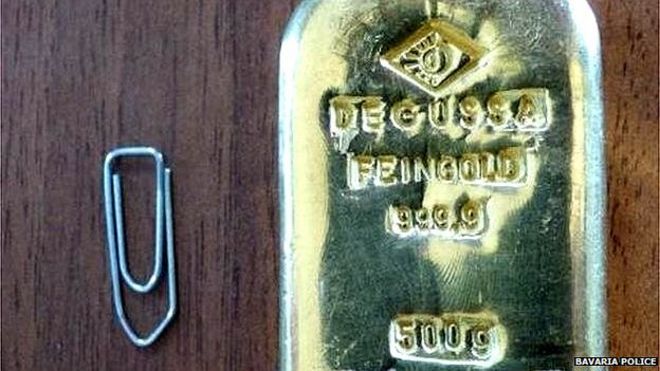
Police photo of gold bar found in Koenigssee lake
The gold bar weighs half a kilogram
The teenager found the gold bar, worth over £13,500, two metres under water in Lake Koenigssee. Police said that as nobody had come forward in six months to claim the gold that the finder gets to keep it.

Lake Koenigssee

The gold was found in Lake Koenigssee in an area called Bavaria in south East Germany near the border with Austria.
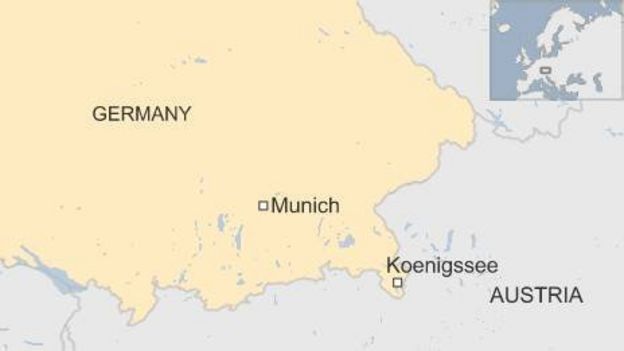
Germany's Koenigssee lake
At the time police divers checked the area for more gold but didn't find anything. Following an investigation, nothing else is known about where it came from.
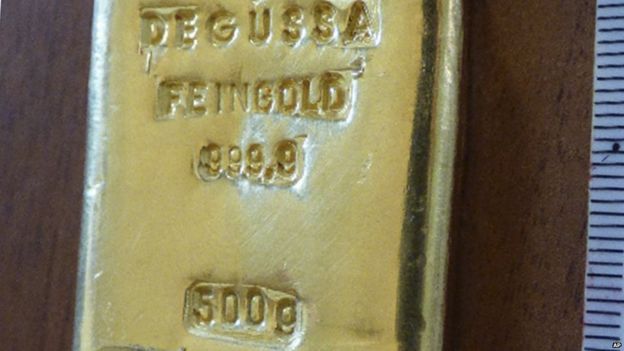
Marks on the gold bar might help identify where it came from
The gold bar has distinctive markings which show the weight of the bar and how pure the gold is.This has helped experts work out that the gold bar is worth a whopping £11,500.
From CBBC Newsround

Saturday, 15 August 2015

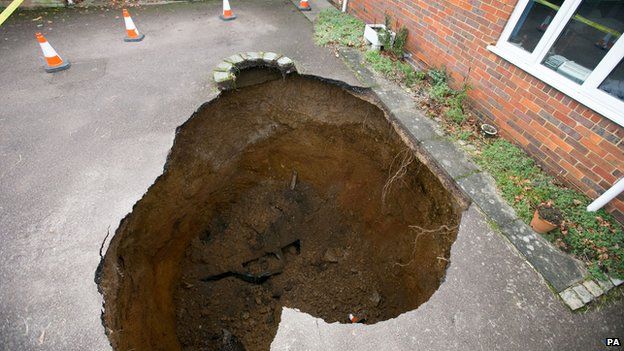
What is a sinkhole?

Sinkholes are so wierd!

Sinkhole

What is a sinkhole?

A sinkhole is a hole in the ground formed when the rock underneath dissolves by groundwater.

Where do they form?

Sinkholes usually form in areas of chalk or limestone - types of rock slowly that dissolve with rain water.
Sinkhole collapses are pretty common in the American state of Florida. Virtually the whole of the state is a limestone platform.
But sinkholes are extremely rare in the UK.

What are they like?

Sinkholes can be of all different sizes ranging from just a few metres to large ones around 20 metres deep.
Collapsed sinkholes generally have steep rock sides and may have streams that then flow underground.

From CBBC Newsround

Watch the following compilation!

Tuesday, 4 August 2015

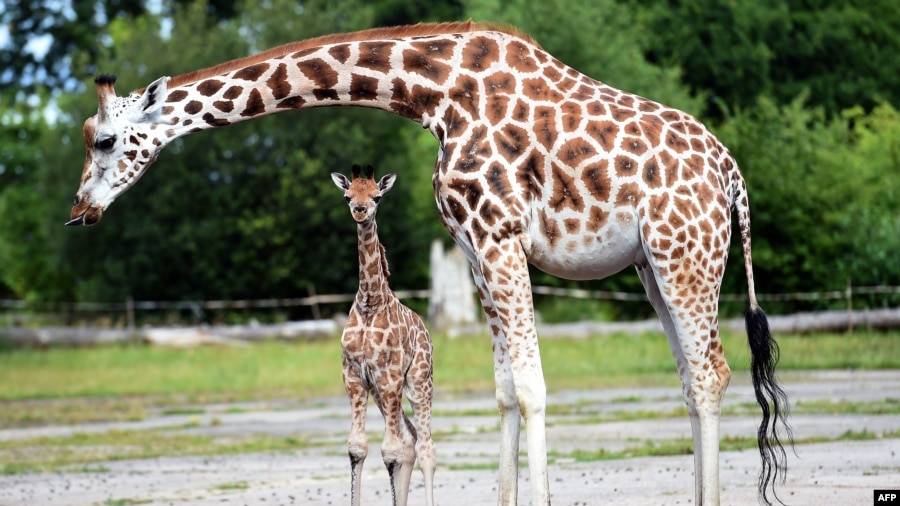
Rare baby giraffe takes first steps

Pictures of the day: Newborn giraffe Kidepo steps out for first time at @chesterzoo (PA) http://t.co/EHxHoW4Iyb
A rare breed of baby giraffe has taken its first steps into the outside world. Rotschild giraffes are really rare and must be preserved at any cost!

 Chester Zoo's newest baby giraffe Kidepo steps out for the first time with his mother Orla as the zoo shows off the three calfs born at the zoo within eight months at Chester Zoo in Chester, north west England.
Kidepo was born at Chester Zoo and strode into the sunshine with mum Orla and dad Meru.
He's the most recent addition of rare Rothschilds' giraffes at the zoo, following on from the births of Zahra in December 2014 and Sanyu in June.
Their arrivals have given an important boost to the special breeding programme for the species, which is classed as endangered.
Sarah Roffe, team manager of the giraffes, said: "It'll take Kidepo a little bit of time to get used to his long legs but he already seems confident and full of personality and he's doing very well so far. We're really pleased with how he has taken to the rest of the herd and with how the herd has quickly taken to having him around." (CBBC newsround)


Saturday, 25 July 2015

Diving dog takes flight


Move over Tom Daley, because there's a new diving champ taking flight.
At St Peter's Pool in Malta this man and his Jack Russell are apparently a regular sight, doing their synchronised dives into the naturally formed pool.
The footage was shot by photographer Mark Casser and has already notched up 150,000 views on social media. (CBBC Newsround)

Sunday, 17 May 2015

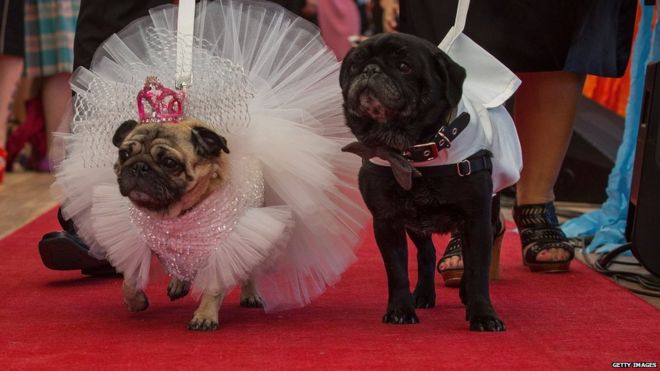
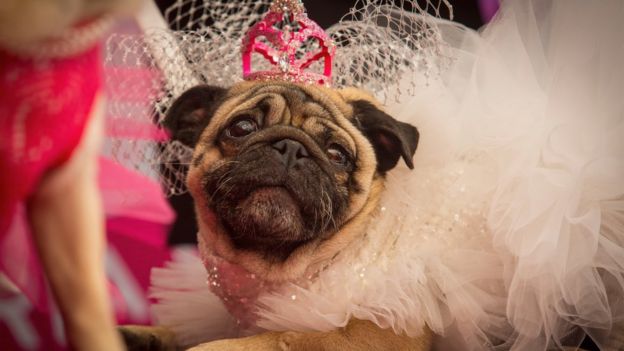
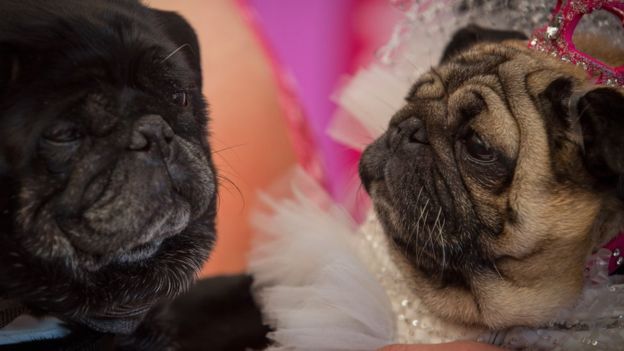
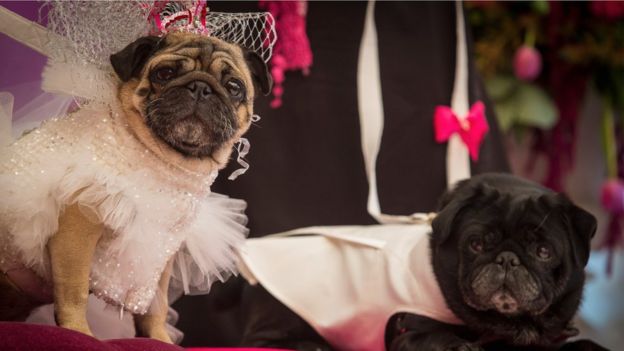
Rescue pugs Jasper and Jasmine get married in Australia

Jasper and Jasmine got married in front of a crowd of 350 human guests and 60 pugs in St Kilda, Australia.

So cuuute!

Pugs
The pugs were adopted 18 months ago by a couple who own a pug rescue and adoption charity.
The charity's founder, Joanna Herceg, said a lot of other charities held dinners to raise money, but she thought they needed something with a difference.
Pug
"So I thought let's do a pug wedding!
"Weddings are happy things and we are all about happiness."
Pugs
The wedding has got a lot of attention, with the pair even having their own social media accounts.
There was "a puggy treats bar" full of dog food for the pugs to eat.
Pug
Human guests enjoyed drinks, canapés, wedding cake and music.
From CBBC Newsround

Friday, 26 December 2014

'Ice pancakes' form on River Dee in Aberdeenshire

The River Dee in Aberdeenshire, Scotland, has provided a spectacular winter scene with the formation of hundreds of "ice pancakes".

These strange formations are known as 'ice pancakes' but look like a fleet of flying saucers.
The River Dee in Aberdeenshire provided a spectacular winter scene, with freezing weather causing the pancakes to form overnight.
The discovery was made by members of The River Dee Trust at Lummels Pool at Birse in Aberdeenshire, Scotland.
The phenomenon is thought to happen when foam floating on the water's surface starts to freeze and bump together.
The pancakes - more commonly seen in the Antarctic - then grow bigger as more and more foam appears.
Joanna Dick, from The River Dee Trust, said: "What we think happened is foam floating about on the water started to freeze, probably at night.


These strange formations are known as 'ice pancakes' but look like a fleet of flying saucers.
The River Dee in Aberdeenshire provided a spectacular winter scene, with freezing weather causing the pancakes to form overnight.
The discovery was made by members of The River Dee Trust at Lummels Pool at Birse in Aberdeenshire, Scotland.
The phenomenon is thought to happen when foam floating on the water's surface starts to freeze and bump together.
The pancakes - more commonly seen in the Antarctic - then grow bigger as more and more foam appears.
Joanna Dick, from The River Dee Trust, said: "What we think happened is foam floating about on the water started to freeze, probably at night.
"Bits of frozen foam got swirled around in an eddy, and became roughly circular.
"Perhaps each disc grew when smaller pieces of unfrozen foam struck the disc, adhered and then froze in place."

It is believed that when temperatures were colder during the night they grew in size and after daybreak they softened.
When the 'pancakes' collided with each other their sides were pushed up to create a bowl like rim"
The circular formations are often seen in the Antarctic and the Baltic Sea.
Joanna added: "This is the first time we have seen them on the River Dee.
"They are a rare occurrence and conditions have to be right for them to form."

From CBBC newsround 
and
Mirror-http://www.mirror.co.uk/news/uk-news/weather-bomb-causes-spectacular-ice-4832197

Wednesday, 3 September 2014

'Alien mushroom creatures' found

Finding a new species is always cause for excitement in the scientific community. And nowadays researchers find themselves having to go into ever more unreachable and hostile environments to find new life. 

deep sea mushroom animals discovered off Australia, which have defied classification.(Public Library of Science) 

So you can imagine the excitement when they dredged the ocean depths off Australia and discovered not only a new species, but something totally unrelated to anything else alive today.
Meet the Dendrogramma. These mushroom-shaped creatures consist mainly of an outer skin and inner stomach, separated by a dense layer of jelly-like material.
Scientists suspect they are related to ancient extinct life forms that lived 600 million years ago. Excitingly, we may be looking at a failed early attempt at multicellular life.
Two species of Dendrogramma have been identified: Dendrogramma enigmatica and Dendrogramma discoides.
They were discovered among a collection of organisms dredged up way back in 1986. The sample came from depths of 400 and 1,000 metres (1,312 and 3,280 feet) on the south-east Australian continental slope.
A new attempt may now be made to find other specimens of the mushroom-like organisms.

From: http://www.independent.ie/world-news/and-finally/alien-mushroom-creatures-found-30560109.html

Wednesday, 13 August 2014

Unusual panda triplets were born in a Chinese zoo

A zoo in southern China has unveiled newborn panda triplets, thought to be the world's first known surviving trio.

The zoo says that the cubs are "the only panda triplets that have ever survived," but newborn mortality rates for pandas are high

Guangzhou's Chimelong Safari Park described the trio, who were born on 29 July, as "a new wonder of the world".
Their mother, Juxiao, was too exhausted to care for them at first but is now nursing the triplets with assistance from feeders throughout the day.
Female pandas are able to conceive for only two or three days a year, leading to a very low reproduction rate.
The cubs are "the only panda triplets that have ever survived," the zoo said in a statement released on Tuesday, but it added that the newborn mortality rate among pandas is "extremely high".
Panda cub with white hair all over.
Panda cubs are 900 times smaller than their Mother.
Mother panda of the triplets, named Juxiao
Newborn panda triplets.
Pandas have a low reproductive rate in captivity, the WWF says.
China's leading panda authority, the Sichuan Wolong National Natural Reserve, has said that although the pandas are still too young to call "surviving", they are the first known living panda triplets.
The cubs have not been named yet and their genders are yet to be announced.
The panda population is threatened by habitat loss as land is increasingly inhabited by humans with around 1,600 pandas left in the wild in China, according to the WWF.