Friday, 30 August 2013

Dog swallows 80 pebbles and is saved

Cute but...silly!

Close up of Star the dog, a Jack Russell terrier
Meet Star, a little dog from Blackpool who seems to have a taste for stones.

The Jack Russell terrier's owners became worried about her after she stopped eating and could hardly move.
When they took her to the vets an X-ray showed she had swallowed 80 stones!
X-Ray showing the stones in Star's stomach and intestines
Star's tiny belly and her intestines were packed full of stones making her dehydrated and unable to eat.
The stones were making her really poorly and the vet had to give her emergency surgery to save her life.
Star's owners have now removed all the stones from their garden!

Thursday, 29 August 2013

Life on Earth may have started on Mars, say scientists

Could we all be Martians?! Because new research suggests life on Earth might have actually begun on Mars.

Mars
Scientists in the US have found evidence to show that some compounds found in human DNA might have originally come from Mars.
They think they were transported to Earth by meteorites billions of years ago.
The research also suggests that back then Mars was actually a better place to kick-start life than Earth was.
"The evidence seems to be building that we are actually all Martians; that life started on Mars and came to Earth on a rock," says Professor Steven Benner who explained the research.
"It's lucky that we ended up here, nevertheless - as certainly Earth has been the better of the two planets for sustaining life" he added, "if our hypothetical Martian ancestors had remained on Mars, there may not have been a story to tell."
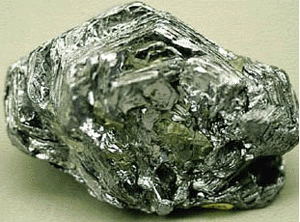
This new evidence has emerged to support the long-debated theory that life on Earth may have come from Mars. According to this research paper presented at the 23rd Goldschmidt conference in Florence, an oxidised mineral form of the element molybdenum which may have been crucial to the origin of life, could only have been  available on the surface of Mars and not on Earth.
“It’s only when molybdenum becomes highly oxidised that it is able to influence how early life formed,” said Professor Steven Benner, from The Westheimer Institute for Science and Technology in the US.
“This form of molybdenum couldn’t have been available on Earth at the time life first began, because three billion years ago the surface of the Earth had very little oxygen, but Mars did. It’s yet another piece of evidence which makes it more likely life came to Earth on a Martian meteorite, rather than starting on this planet,” Benner said.
In the research presented at the conference, Benner tackled two of the paradoxes which make it difficult for scientists to understand how life could have started on Earth.
The first is dubbed by Benner as the ‘tar paradox’.

All living things are made of organic matter, but if you add energy such as heat or light to organic molecules and leave them to themselves, they don’t create life. Instead, they turn into something more like tar, oil or asphalt.
From CBBC newsround / Hindustantimes- World

Edinburgh zoo prepares for possible panda birth

It's the big question that nobody knows the answer to: is Tian Tian the panda pregnant?

Tian Tian and Yang Guang

Staff at Edinburgh Zoo in Scotland are preparing for what could be the first panda cub to be born in Britain.
They still can't say for certain whether their female panda - on loan from China - is pregnant but say she is showing all the right signs.

If Tian Tian is carrying a cub, the birth is expected to be in the next two weeks - so the wait goes on.
One of the reasons why there is so much excitement around the potential pregnancy is that giant pandas are very rare.
There are only between 1,000 and 2,000 thought to remain in the wild.
Tian Tian and Yang Guang are the first to live in the UK for 17 years.
Will they or won’t they? Are Edinburgh’s Pandas getting in the mood for love?
Tian Tian and Yang Guang they seemed to be very much in love not long ago

Panda cubs are born blind, hairless and unable to move, making them very dependent on their mums for the first few months.
After six to eight weeks, cubs open their eyes for the first time. They feed on their mother's milk for the first year and start eating bamboo at around six months.

From CBBC newsround

Saturday, 24 August 2013

Rare albino hedgehogs named after Prince George

Three rare albino hedgehogs in Russia have been named after Prince George of Cambridge.

Parent hedgehogs Maria and Gosha, eat with their albino babies in a zoo in Moscow, Russia.
The triplets have been given the names George, Alexander and Louis as they were born on the same day as the future UK king.
The exhibition centre where they live in Moscow has even made them their own royal residence to live in!
The miniature castle is made of wood and has dark velvet curtains and a luxurious bed.
On Thursday, the tiny triplets were introduced to their new home at the All-Russia Exhibition Center.
The wooden castle is painted purple, with curtained windows and a plush bed inside.
A red carpet was rolled out to welcome the babies and their parents, the Associated Press reported.
The zoo is hoping that Prince George himself will visit the hedgehogs one day, spokeswoman Yevgeniya Polonskaya told AP.
An albino African hedgehog gave birth to the babies, Polonskaya told Russia's RIA-Novosti news agency in July.
"Albino hedgehogs don’t usually breed in captivity," she was quoted as saying. "If people keep a standard hedgehog at home, it might give birth, but to no more than two babies. But we saw the arrival of triplets on July 23."